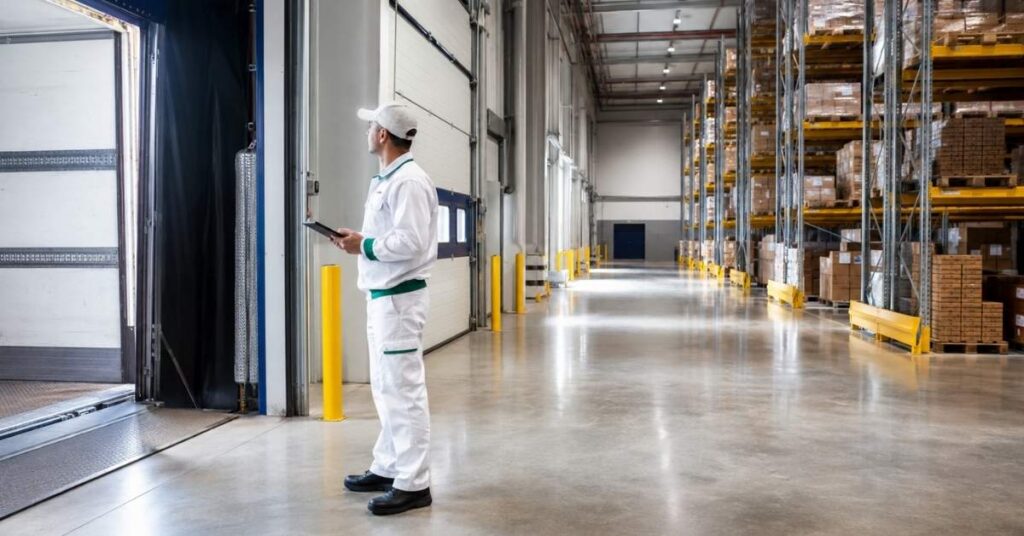
A warehouse may look organized from the loading dock, while dust, spills, damaged packaging, and loose debris build up elsewhere. Those conditions are not just cosmetic. They can block walkways, hide floor damage, affect inventory, and slow daily work.
Effective warehouse cleaning services turn housekeeping into a planned safety and operations program. A trained team cleans high-risk zones on a schedule, documents completed work, and adjusts the plan when traffic or production changes. The result is a safer, more efficient facility that is easier to manage.
| Table of Contents • Warehouse Cleaning as a Workplace Safety Control • Protecting Employees, Visitors, and Inventory • Improving Productivity and Equipment Care • What Professional Warehouse Cleaning Includes • How Often a Warehouse Should Be Cleaned • Common Mistakes, Best Practices, and Provider Selection • Frequently Asked Questions • Conclusion and EBS Maintenance Call to Action |
1. Warehouse Cleaning Services Are a Workplace Safety Control

A cleaning plan should support your safety program. OSHA’s walking-working surfaces standard requires workplaces, passageways, storerooms, and walking surfaces to stay clean, orderly, sanitary, and as dry as feasible. It also requires regular inspection and prompt action on hazards.
Warehouse cleaning services support those daily housekeeping duties. They do not replace inspections, repairs, training, or safety policies, but they make problems easier to spot and correct.
Keep floors, aisles, and travel lanes clear.
Loose stretch wrap, pallet pieces, leaking containers, and tracked-in moisture can create immediate risks. Routine warehouse floor cleaning removes grit and residue, while fast spill response keeps pedestrian and forklift routes usable.
A leaking container near a picking aisle needs more than a quick mop. Isolate the area, use the correct materials, dry the floor, and report the source.
Control dust before it becomes a larger hazard
Dust collects on racks, equipment guards, pipes, ledges, and overhead structures. In some facilities, it may be combustible. OSHA notes that finely divided combustible material can become explosive when suspended in air under the right conditions.
Therefore, industrial warehouse cleaning must match the facility’s materials and hazard assessment. Teams may need approved vacuums or controlled collection. Aggressive blowing and dry sweeping are not safe in every setting.
2. Clean Warehouses Protect Employees, Visitors, and Inventory
People notice poor housekeeping quickly. Dusty workstations, overflowing waste, and dirty support areas can hurt morale. Consistent care shows employees, drivers, vendors, and customers that the facility is managed.
Warehouse cleaning services help protect goods from preventable contamination. Dust, moisture, residue, and pest-attracting debris can affect packaging, especially near docks, rack bases, and neglected corners.
Use sanitation where it adds value.
Warehouse sanitation should follow actual use patterns. Break rooms, restrooms, shared tools, door handles, time clocks, and frequently touched controls often need more attention than sealed cartons on upper racks.
Cleaning removes soil first. Sanitizing or disinfecting follows when the site plan, product instructions, or an exposure event calls for it. CDC guidance stresses following label directions, allowing full contact time, ensuring adequate ventilation, using recommended protection, and never mixing chemicals.
Protect products through zone-based cleaning.
A zone map separates docks, storage aisles, packing areas, offices, restrooms, and waste areas. It also keeps tools from moving between incompatible zones.
Professional warehouse cleaning should use written methods for each zone. A food distribution facility, for example, may require tighter controls than a warehouse storing sealed hardware.
3. Clean Facilities Improve Productivity and Equipment Care
Warehouse cleaning services can improve productivity by reducing small delays. Employees spend less time walking around blocked staging areas or stopping for preventable spills. Clear zones support smoother movement and shift handoffs.
Regular cleaning also reveals problems sooner. Leaks, damaged joint filler, worn markings, and debris are easier to see on a clean floor.
Support faster, more orderly workflows.
Busy docks can collect labels, wrap, cardboard, dirt, and tire residue within one shift. A practical schedule assigns quick cleanup during operations and deeper work during quieter periods.
At a distribution center with afternoon receiving and overnight picking, day staff can address debris and spills. An overnight crew can complete warehouse floor cleaning, dock detailing, and waste removal outside peak forklift traffic.
Reduce avoidable wear
Abrasive grit can dull coated or sealed floors. Dust can settle near equipment, vents, sensors, and charging areas. Cleaning cannot replace maintenance, but it can reduce buildup.
Facilities with heavy traffic may benefit from scheduled Floor and Carpet Care Services. A tailored plan can combine sweeping, scrubbing, spot treatment, and periodic restoration.
4. What Professional Warehouse Cleaning Should Include

Before pricing warehouse cleaning services, a provider should complete a site walkthrough. Square footage alone does not reveal ceiling height, dock activity, soil type, equipment restrictions, or support spaces. Those details shape labor, equipment, products, and timing.
Most warehouse cleaning services include a tailored mix of these tasks:
- Sweeping, vacuuming, and debris removal in aisles and work zones.
- Auto-scrubbing, mopping, degreasing, and spot treatment
- Cleaning docks, bay areas, entrances, and staging zones.
- Dusting racks, ledges, pipes, vents, and accessible overhead surfaces
- Removing waste, cardboard, and recycling
- Cleaning restrooms, break rooms, offices, and support areas
- Wiping high-touch surfaces under the sanitation plan
- Detailing floor edges, corners, barriers, and bollards
EBS Maintenance’s Warehouse Cleaning Services cover dust and debris removal, loading areas, aisle and floor care, spill response, equipment-sensitive areas, and flexible scheduling.
Equipment, chemistry, and training matter
A professional team matches equipment to the surface and soil. Options may include industrial vacuums, scrubbers, microfiber systems, extension tools, and nonabrasive methods near machinery.
The EPA Safer Choice program helps businesses identify effective products with ingredients considered safer for people and the environment. Every product still requires correct dilution, labeling, storage, ventilation, and use.
Support spaces may also need recurring Janitorial Services or targeted Disinfection Services. Combining related commercial cleaning services under one quality process can simplify communication and reduce vendor gaps.
5. How Often Should a Warehouse Be Cleaned?

There is no universal schedule. Warehouse cleaning services should reflect traffic, soil, products, shifts, weather, customer standards, and known hazards. A 24-hour fulfillment center needs a different plan than a low-traffic storage building.
A practical starting schedule includes:
Daily
- Respond to spills and remove loose debris.
- Clear pedestrian routes, staging zones, and dock approaches
- Empty waste and recycling points
- Service restrooms, break rooms, and shared areas
Weekly
- Complete planned warehouse floor cleaning in high-traffic zones.
- Clean rack bases, corners, floor edges, and accessible spaces under equipment
- Detail dock doors, barriers, bollards, and touchpoints
Monthly
- Clean low-traffic storage zones and rack exteriors
- Review doors, vents, floor markings, and recurring soil areas.
Quarterly or semiannually
- Perform high dusting with proper access controls.
- Schedule deep degreasing, floor restoration, or specialty cleaning.
- Review the scope against operational changes and quality findings.
Industrial warehouse cleaning may need greater frequency when production creates dust, oil, metal particles, food residue, or specialized soil. Seasonal rain can also increase entrance moisture and grit. Good warehouse cleaning services adjust the schedule instead of repeating the same checklist.
6. Common Mistakes, Better Practices, and Provider Selection
Even an active program can fail when the scope is unclear. Common mistakes include:
1. Cleaning only visible areas. Rack bases, floor edges, dock corners, and overhead surfaces still collect soil.
2. Using the same tools everywhere. This can transfer residue between incompatible zones.
3. Using unsafe dust-removal methods. Dry sweeping or compressed air may spread fine dust.
4. Creating wet-floor conflicts. Active lanes need barriers, sequencing, and communication.
5. Treating every surface with disinfectant. Overuse adds cost and exposure without replacing cleaning.
6. Skipping inspections and records. Recurring misses can become accepted conditions.
Better programs use a documented scope, suitable color-coded tools, clear spill procedures, and supervisor checks. Warehouse sanitation tasks should list the product, dilution, contact time, surface, frequency, and owner.
Professional warehouse cleaning requires coordination with site safety rules. Crews should know restricted areas, emergency contacts, chemical communication, traffic patterns, and access procedures.
How to choose the right provider
When comparing warehouse cleaning services, do not choose commercial cleaning services on price alone. Request a walkthrough and compare how each provider evaluates risk, workflow, and quality. Look for:
- Relevant warehouse and industrial experience
- Trained, vetted, and supervised personnel
- Equipment suited to the surfaces and ceiling heights
- Written safety procedures and site orientation
- Insurance and clear subcontractor responsibility
- Flexible scheduling that limits disruption
- A scope with frequencies, exclusions, and quality measures
- Reliable issue reporting and change approval
The best proposal explains how work will be performed and separates routine service from high dusting, deep degreasing, floor restoration, and other projects.
7. Frequently Asked Questions About Warehouse Cleaning Services
How often should a warehouse be professionally cleaned?
Most facilities need daily housekeeping, weekly floor and detail work, and periodic deep cleaning. Frequency depends on traffic, products, soil, shifts, and safety requirements.
What do warehouse cleaning services include?
Typical work includes debris removal, aisle and dock cleaning, floor care, dusting, waste handling, spill response, and support-area cleaning. The final scope should follow a walkthrough.
Can a cleaning crew work while the warehouse is operating?
Yes. Providers may work by zone, during shift changes, overnight, or on weekends. High-risk work still requires barriers, communication, and site approval.
What is the difference between industrial cleaning and regular janitorial work?
Industrial warehouse cleaning covers larger spaces, heavier soil, elevated surfaces, loading zones, specialized floors, and equipment-sensitive areas. Janitorial work focuses more on restrooms, offices, break rooms, waste, and routine touchpoints.
How long does a warehouse cleaning visit take?
Time depends on size, height, soil, traffic, equipment access, and requested tasks. A walkthrough allows accurate staffing and scheduling.
What should a facility do before the cleaning team arrives?
Confirm access, identify restricted zones, secure sensitive materials, report known hazards, and provide site safety rules and emergency contacts.
Are greener cleaning products available for warehouses?
Yes. Many facilities can use lower-impact products for suitable tasks. Product choice must still match the soil, surface, safety data, and performance requirements.
8. Build a Safer, More Efficient Warehouse with EBS Maintenance
A clean warehouse supports safer movement, clearer inspections, better product care, and more reliable operations. The strongest results come from warehouse cleaning services that combine routine housekeeping, targeted warehouse sanitation, periodic deep cleaning, and documented quality checks.
EBS Maintenance brings 25 years of experience and flexible commercial cleaning services to warehouses, distribution centers, manufacturing sites, and other demanding facilities across Orange County, Los Angeles, and nearby areas. Its teams can build a scope around your floors, docks, storage zones, support spaces, and schedule. Choose warehouse cleaning services that fit the way your facility works. Contact EBS Maintenance to arrange a walkthrough and request a customized professional warehouse cleaning.