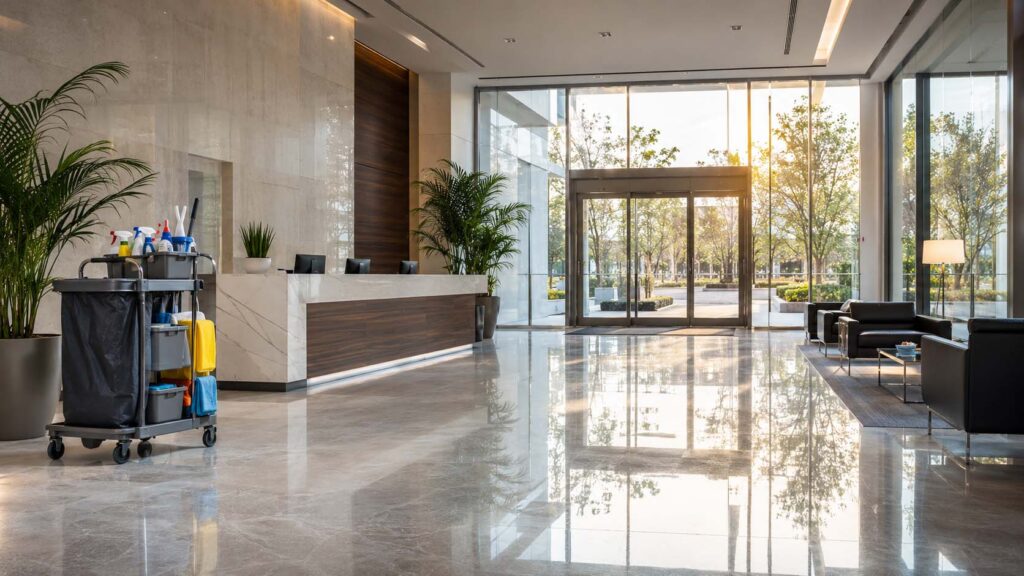
Walk into any commercial building, and you can usually tell within about ten seconds whether someone’s on top of the maintenance or not. A sticky break room floor. Dust on the window ledges. A restroom that’s “clean” but doesn’t quite feel that way. None of that happens overnight; it’s what happens when commercial property maintenance slips off the schedule and nobody notices until a client does. For property managers and business owners around Orange County and Los Angeles, staying ahead of it is one of the cheapest ways to protect a building’s condition and value over time. This guide covers what it involves, why it matters, and how to build a routine that holds up.
What Is Commercial Property Maintenance?
At its core, this is the ongoing care of a building’s condition, inside and out: routine cleaning, floor care, sanitation, and whatever specialized upkeep a facility needs. It’s not one service. It’s a set of scheduled tasks meant to catch small problems before they turn expensive.
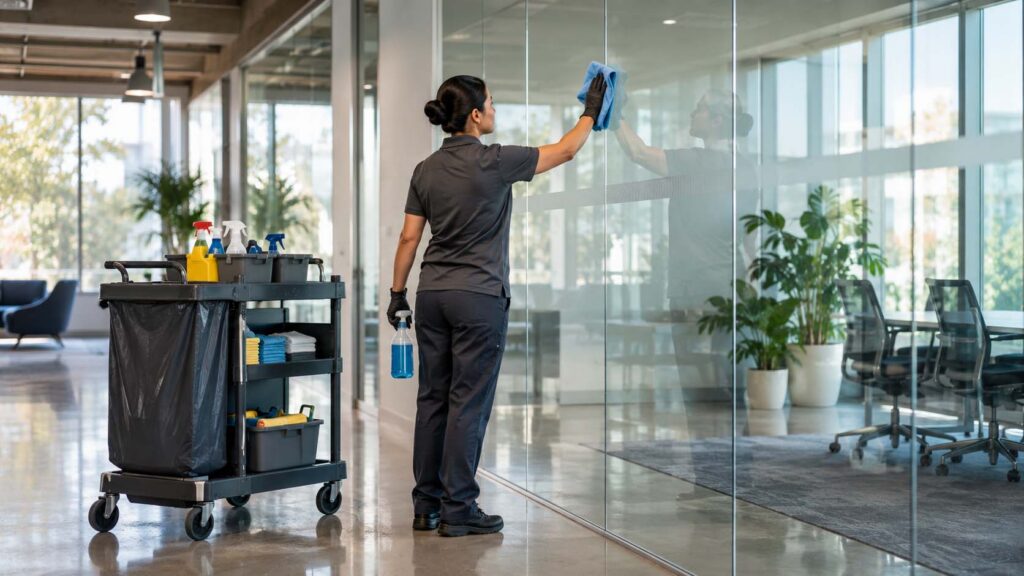
Most buildings split this into two buckets: the structural and mechanical side (HVAC, plumbing, roofing) and the cleanliness side janitorial work, disinfection, floor maintenance, that kind of commercial property care. This article is mostly about the second bucket, since that’s where day-to-day appearance gets shaped and where a lot of commercial building maintenance budgets actually go. Our services cover that ground.
Why Commercial Property Maintenance Matters for Businesses
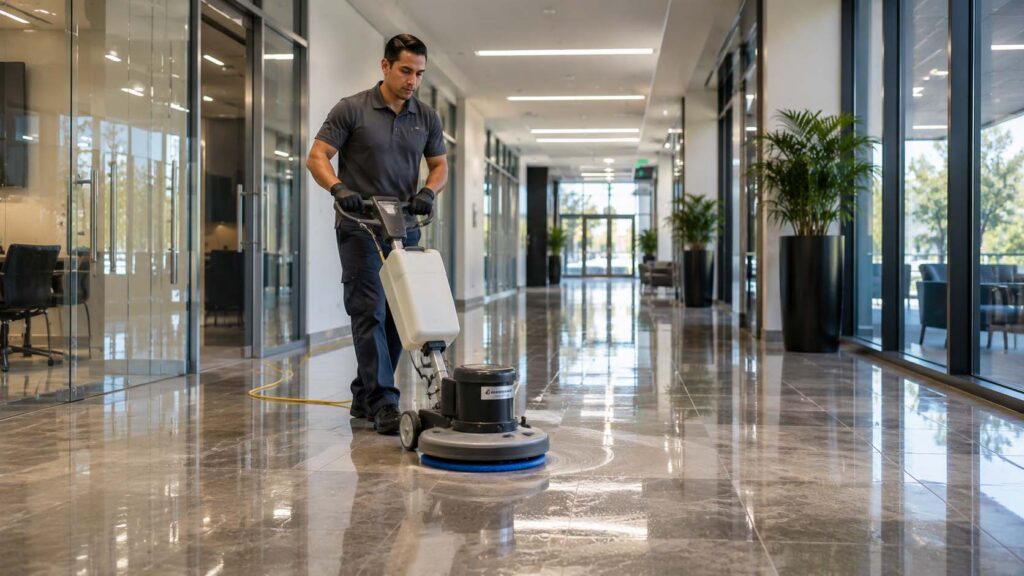
A well-kept property protects a company’s image and keeps the environment healthier for the people using it. First impressions form fast; a facility that’s cared for tells visitors something before anyone says a word.
Staying consistent with commercial property maintenance also cuts down on bigger issues down the road. Dirty air filters and buildup in high-traffic corners shorten the life of building materials faster than people expect. The EPA has pointed out that indoor air quality is tied directly to how well a building is cleaned and ventilated, so this isn’t just about looks; it affects the people inside (EPA, indoor air quality).
What Does Commercial Property Maintenance Include?
There’s a lot under this umbrella, but most facilities lean on a core group of recurring commercial property care tasks to stay presentable.
Routine Cleaning and Janitorial Care
Daily cleaning is the backbone of any maintenance plan: trash, dusting, restroom sanitation, and keeping common areas from looking neglected. Professional janitorial services that show up consistently matter more than people give them credit for. Inconsistent cleaning tends to stand out more than none at all.
Floor, Carpet, and Surface Care
Floors take a beating from daily wear more than almost anything else in a commercial space. Regular vacuuming, mopping, and periodic deep cleans stretch the life of carpet and hard flooring alike, and facilities that invest in real floor and carpet care tend to avoid premature replacements.
High-Traffic and Shared Area Maintenance
Lobbies, elevators, break rooms, and restrooms get hit hardest because they see the most traffic. A lot of businesses bring in day porter services to handle these spots throughout the day instead of relying only on an overnight crew.
Specialized Facility Cleaning
Some facilities need more than a standard janitorial crew can offer. Healthcare buildings, labs, and manufacturing floors often require specialty cleaning, disinfection, or cleanroom cleaning protocols that go beyond general cleaning, in line with CDC facility guidance (CDC).
Benefits of Professional Commercial Property Maintenance Services
A provider that specializes in commercial property maintenance services beats relying on internal staff or ad hoc cleaning in a few concrete ways:
- Scheduling stays consistent even when internal staffing changes
- Crews already know commercial-grade equipment, so there’s no learning curve
- Sanitation in high-traffic areas gets handled properly, not as an afterthought
- Building maintenance services can scale up or down as a property’s needs shift
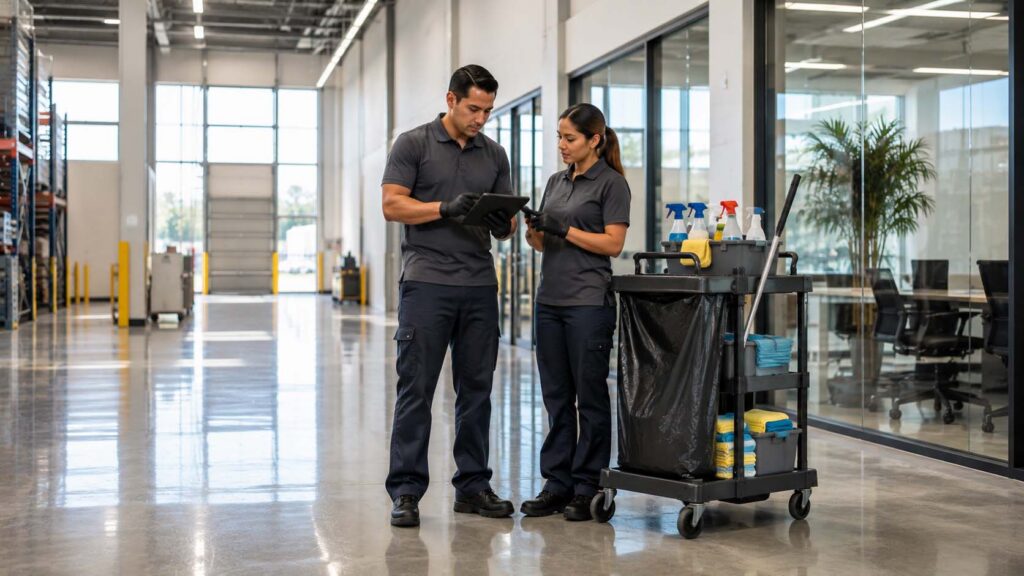
There’s also the reputation piece: people notice a clean space, and notice an unclean one faster. Professional commercial building maintenance is invisible when it’s working and glaring when it’s not.
How to Build an Effective Maintenance Routine
Start by figuring out what needs daily attention and what can wait. Entryways, restrooms, break rooms: daily, no question. Deep floor work or window cleaning can run on a longer cycle.
It also helps to stop treating every facility the same way. An office doesn’t need what a warehouse needs. Businesses spanning multiple industries we serve retail, industrial, and office buildings do better with a provider willing to tailor the plan instead of running a generic checklist. A simple log of what’s been done makes it easier to catch gaps early.
Choosing the Right Commercial Property Maintenance Provider
Look for documented experience, a clear scope of property maintenance services, and enough flexibility to adjust as things change. Ask how they train staff and handle unusual requests; the answer tells you a lot. Checking a provider’s About Us page is usually a decent starting point for that kind of digging.

Local knowledge counts too. A provider already working in commercial property maintenance across Orange County and Los Angeles understands the regional building stock and plans around actual local business hours. Worth checking their full range of building maintenance services, including warehouse cleaning and green cleaning, and worth requesting a site visit before signing anything; a walkthrough tells you more than a quote ever will.
Common Maintenance Mistakes Businesses Should Avoid
A handful of mistakes show up again and again:
- Treating cleaning as reactive instead of scheduled
- Putting off deep floor or carpet cleaning until the damage is obvious
- Using one cleaning approach for every part of the facility
- Picking a provider on price alone
These shortcuts save a little money upfront but almost always cost more later — faster wear, emergency deep cleans, the works.
Frequently Asked Questions
What is commercial property maintenance?
It’s the ongoing upkeep of a commercial building’s cleanliness and condition: janitorial care, floor maintenance, sanitation, and specialized cleaning where needed. The goal is a facility that’s functional, presentable, and safe to use every day.
What does commercial property maintenance typically include?
Routine janitorial cleaning, day porter support, floor and carpet care, disinfection, and specialized services like cleanroom or warehouse cleaning, depending on what the facility actually needs.
Why is regular property upkeep important for businesses?
It protects how a company looks to the outside world, supports a healthier indoor environment, and helps avoid costly repairs caused by neglect. It also shapes how employees and visitors experience the space.
How often should a commercial property be maintained?
Depends on the facility and traffic. High-traffic spots like restrooms and entryways need daily attention. Deep floor cleaning can usually run weekly or monthly.
What are the benefits of professional property maintenance services?
Consistent scheduling, trained staff, the right equipment, and the ability to scale as needs change are hard to pull off with an internal team alone.
How can businesses choose the right maintenance provider?
Documented experience, a clear service scope, local knowledge, and a willingness to do a site visit before committing are good starting points. Their actual range of services should line up with what your facility needs.
Final Thoughts
Commercial property maintenance isn’t a one-time fix; it’s a standing responsibility that shapes how a business gets perceived and how a facility holds up. Businesses that keep it consistent, rather than reactive, run into fewer problems and make a better first impression. If a property in Orange County or Los Angeles is overdue for a look, contact EBS Maintenance and talk through a plan that fits.