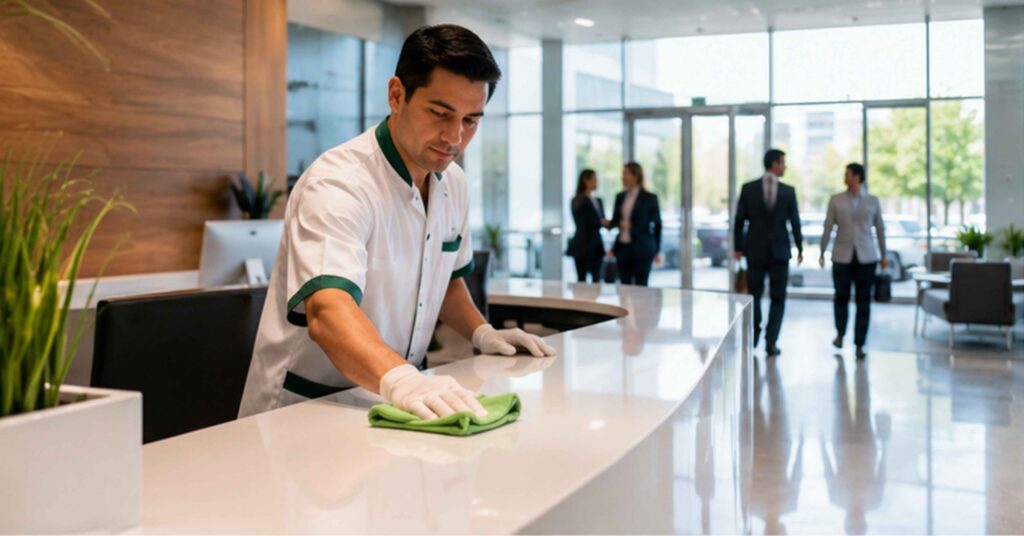
Walk into any busy office lobby at 2 p.m., and you’ll notice something. The floors are still spotless. Meanwhile, the trash bins aren’t overflowing. Additionally, the restrooms look just as fresh as they did at 9 a.m. That’s not luck. Instead, it’s the result of professional day porter services working quietly in the background.
Most businesses invest heavily in nightly commercial cleaning services, yet they overlook what happens during business hours. Spills, foot traffic, and constant use can undo a night’s worth of cleaning within a few hours. That’s where a day porter steps in, keeping your facility presentable and safe from open to close.
In this article, we’ll explain what daytime porters actually do, why they matter for nearly every type of business, and how to choose the right provider. Additionally, whether you manage an office building, a warehouse, or a retail space, this guide will help you understand the real value behind daytime facility support.
Table of Contents
- What Are Day Porter Services?
- Why Businesses Rely on Commercial Day Porter Services
- Key Responsibilities of a Day Porter
- Industries That Benefit Most
- Day Porter vs. Janitorial Services: What’s the Difference?
- Practical Tips for Getting the Most from Day Porter Services
- Common Mistakes Businesses Make
- How to Choose the Right Provider
- Conclusion
What Are Day Porter Services?

A day porter provides on-site support for cleaning, maintenance, and light facility tasks throughout the business day. However, unlike nightly janitorial teams, a day porter works while your building is occupied. As a result, they can respond immediately to spills, restroom needs, or unexpected messes.
This proactive approach makes a noticeable difference. For example, employees notice cleaner break rooms, and visitors notice tidy lobbies. Consequently, your facility maintains a professional image from the moment it opens until the moment it closes.
Many building owners assume overnight cleaning is enough. However, a space that looks perfect at 6 a.m. rarely stays that way by noon, especially in high-traffic environments.
Why Businesses Rely on Commercial Day Porter Services
Commercial day porter services have become essential for facilities that see constant activity. Indeed, offices, warehouses, and retail centers all generate mess throughout the day, not just after hours. Therefore, relying solely on overnight cleaning leaves a gap that day porters are trained to fill.
First Impressions Matter
Clients and customers judge a business within seconds of walking through the door. For example, a stained carpet or an overflowing trash can sends the wrong message. On the other hand, a clean, well-maintained space builds instant trust.
Health and Safety Compliance
Facility maintenance services, including day porters, help businesses stay compliant with health and safety expectations. For instance, wet floors, cluttered walkways, and unsanitary restrooms create liability risks. However, a day porter addresses these issues before they become accidents. For guidance on workplace safety standards, many facility managers reference resources from the Occupational Safety and Health Administration (OSHA), which outlines best practices for maintaining safe work environments.
Employee Productivity
A tidy workplace supports focus and morale. Additionally, employees are less likely to get sick when restrooms and shared spaces are sanitized regularly throughout the day, not just once overnight. As a result, fewer sick days mean better productivity for the whole team.
Key Responsibilities of a Day Porter
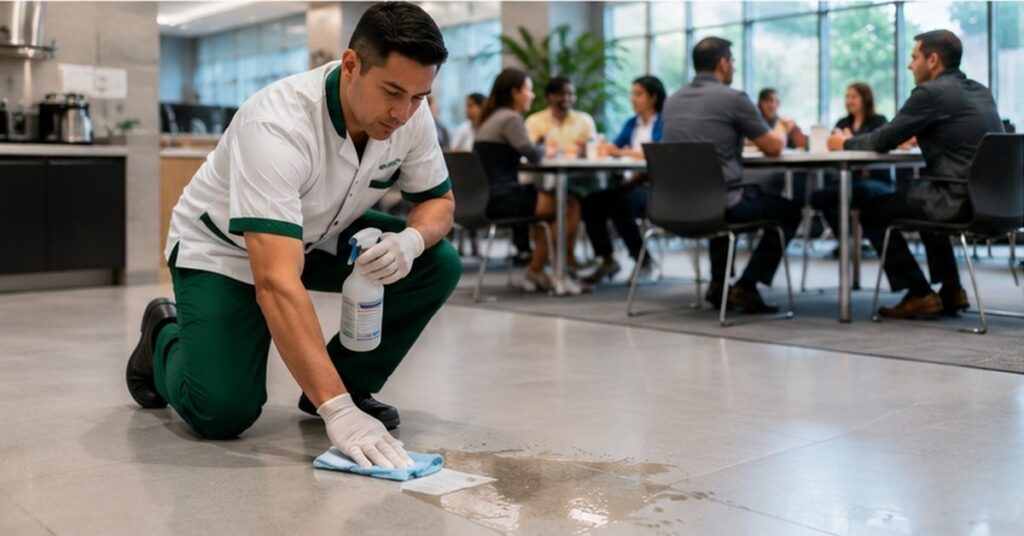
A skilled day porter handles far more than emptying trash bins. In addition, their typical duties include:
- Restocking restroom supplies and sanitizing fixtures
- Spot-cleaning spills and stains as they happen
- Vacuuming and sweeping high-traffic areas
- Wiping down break rooms, conference rooms, and common areas
- Managing trash and recycling throughout the day
- Monitoring entrances and lobbies for cleanliness
- Reporting maintenance issues, such as leaks or broken fixtures
- Assisting with event setup or breakdown when needed
Furthermore, many day porters coordinate with facility managers to prioritize tasks based on foot traffic patterns. For example, a warehouse day porter may focus on loading dock areas during shipping hours, while an office day porter concentrates on lobbies and restrooms during peak visitor times.
Industries That Benefit Most
While nearly any business can benefit from a day porter, certain industries rely on them heavily.
Office Buildings and Corporate Campuses
High employee and visitor traffic makes daytime upkeep essential. Meanwhile, shared spaces like kitchens and conference rooms need constant attention, which is why many corporate campuses pair office cleaning services with a dedicated day porter.
Retail and Shopping Centers
Customer experience directly affects sales. Therefore, a day porter keeps entryways, restrooms, and fitting rooms presentable throughout operating hours.
Warehouses and Industrial Facilities
Dust, debris, and spills are common in warehouse settings. Consequently, warehouse cleaning combined with daytime porter support reduces safety hazards and supports smoother operations.
Healthcare and Educational Facilities
These environments require frequent sanitization. As a result, day porters play a critical role in infection control, often working alongside guidelines similar to those published by the Centers for Disease Control and Prevention (CDC) for maintaining sanitary public spaces.
Day Porter vs. Janitorial Services: What’s the Difference?

This is one of the most common questions business owners ask. However, while the two overlap, they serve different purposes.
Janitorial services typically happen after business hours. For example, crews perform deep cleaning tasks like floor stripping, waxing, and thorough disinfection when the building is empty. Meanwhile, office cleaning services under this model focus on resetting the space overnight.
Day porters, on the other hand, work during business hours. Their job isn’t deep cleaning; it’s maintaining what the janitorial team already accomplished. Therefore, the two services complement each other rather than compete.
Most facilities get the best results by combining both. Nightly commercial cleaning services handle the heavy lifting, while daytime porters maintain that clean standard until the next cleaning cycle begins. Together, they form a complete set of facility maintenance services that covers your building around the clock.
Practical Tips for Getting the Most from Day Porter Services
- Define peak hours clearly. Share your busiest times with your provider so staffing aligns with actual demand.
- Set clear communication channels. A simple check-in system helps porters flag maintenance issues quickly.
- Review responsibilities seasonally. Foot traffic changes during holidays or events, so schedules should adjust accordingly.
- Provide feedback regularly. Consistent feedback helps your provider fine-tune coverage over time.
- Combine services strategically. Pairing day porter support with nightly cleaning crews, floor care, or window cleaning creates a complete maintenance plan.
Common Mistakes Businesses Make
Even experienced facility managers sometimes overlook a few key details when planning day porter coverage. As a result, small oversights can lead to bigger cleanliness and safety problems down the line.
- Assuming overnight cleaning is sufficient. High-traffic buildings need daytime support too.
- Understaffing during peak hours. A single porter can’t cover a large facility during rush periods.
- Failing to communicate expectations. Vague instructions lead to inconsistent results.
- Ignoring seasonal fluctuations. Retailers, for instance, often need extra coverage during holiday shopping seasons.
- Choosing price over experience. The cheapest provider isn’t always the most reliable one.
Ultimately, avoiding these mistakes helps ensure your facility stays consistently clean, safe, and welcoming.
How to Choose the Right Provider
Not every janitorial services company offers dedicated day porter support. Therefore, when evaluating providers, consider the following:
- Experience in your industry. A provider familiar with warehouses, offices, or healthcare facilities understands unique compliance needs.
- Trained and background-checked staff. Since day porters work during business hours, trustworthiness matters.
- Flexible scheduling. Your provider should adjust staffing based on your facility’s traffic patterns.
- Range of services. Look for a company that also offers commercial cleaning services, disinfection, and floor care as part of a broader set of facility maintenance services, so you’re not managing multiple vendors.
- Clear reporting. A good provider documents completed tasks and flags maintenance concerns promptly.
EBS Maintenance has spent years supporting facilities across multiple industries with dependable day porter services, alongside our office cleaning services and other facility programs. Our teams understand that daytime upkeep requires a different rhythm than overnight cleaning, and we tailor coverage accordingly.
Conclusion
Professional day porter services fill a gap that overnight cleaning simply can’t. From maintaining restrooms to responding to spills within minutes, a dedicated day porter keeps your facility looking its best throughout the entire business day. Moreover, combining day porter support with regular nightly cleaning creates a maintenance plan that protects your reputation, supports employee wellbeing, and reduces safety risks.
If your facility experiences heavy foot traffic, frequent visitors, or ongoing maintenance needs, it’s time to consider dedicated daytime support. Contact EBS Maintenance today to discuss a customized day porter services plan built around your facility’s schedule and needs.
Frequently Asked Questions
1. What is included in day porter services?
These services typically include restroom maintenance, spill cleanup, trash management, common area upkeep, and minor maintenance reporting throughout business hours.
2. How is a day porter different from a janitor?
A day porter works during business hours to maintain cleanliness, while janitorial staff typically perform deep cleaning after hours when the facility is closed.
3. Which businesses need this kind of support the most?
Offices, retail centers, warehouses, healthcare facilities, and educational institutions benefit the most due to high daytime foot traffic.
4. Can this service be customized?
Yes. Providers like EBS Maintenance tailor schedules and responsibilities based on your facility’s peak hours and specific needs.
5. Do day porters handle emergency spills or messes?
Yes. One of their main roles is responding quickly to spills, restroom issues, or unexpected messes during operating hours.
6. Is day porter service expensive compared to standard cleaning? Costs vary based on facility size and coverage hours. However, many businesses find the investment worthwhile since it prevents bigger cleanliness and safety issues.
7. How do I get started with day porter services?
Simply contact a trusted provider like EBS Maintenance to schedule a facility assessment and receive a customized service plan.